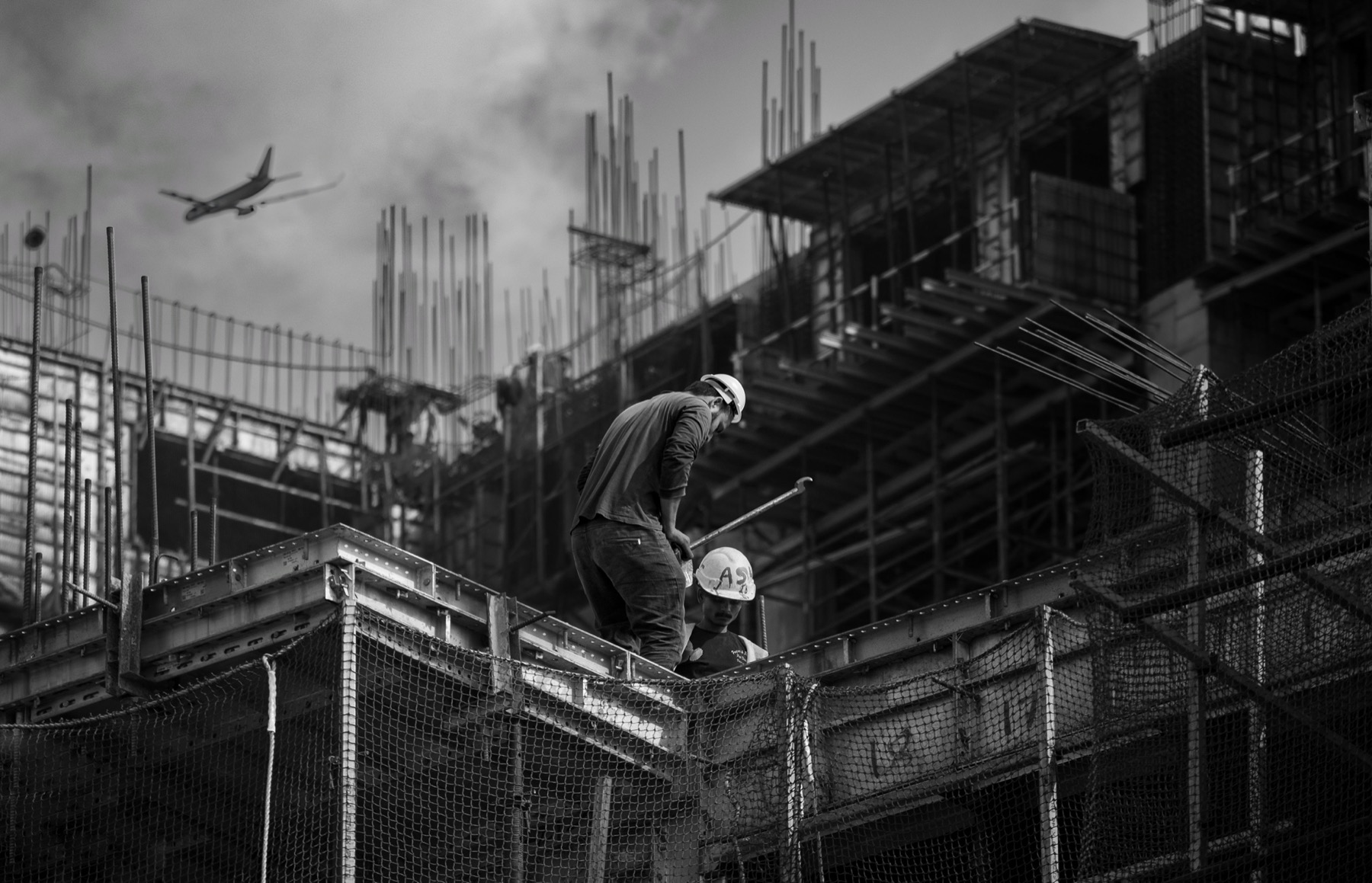
The operating context
Construction is built through daily coordination between site, office, crews, subcontractors, suppliers, and inspectors. The job changes in the field first; the record often catches up only when cost, schedule, or payment is exposed.
Manual work is not the problem. Risk appears when coordination depends on memory, scattered messages, and records that arrive too late.
- 01
The office sets budgets, schedules, procurement, and contract commitments before conditions on site unfold.
- 02
Foremen, crews, subcontractors, and suppliers coordinate daily work around access, sequence, materials, and changing conditions.
- 03
Progress, variations, deliveries, inspections, and issues are captured through photos, paper, calls, chat, and separate logs.
- 04
Project controls reconstruct what happened to support the next decision, claim, draw, or client conversation.
Critical handoffs
Where work changes hands, risk changes with it.
These are the points where an operation needs shared context—not another conversation to reconstruct what happened.
- 01
Office → site
The current plan, scope, and procurement position must be usable where the work is being built.
- 02
Site → project controls
Progress and field conditions need a route into schedule and cost before reporting day.
- 03
Field change → commercial decision
An instruction or unforeseen condition must become a visible decision with a traceable consequence.
- 04
Evidence → payment
Delivery, inspection, and approval records need to support the draw before the commercial deadline.
Operating control
Make site evidence usable before the commercial decision.
Project control becomes credible when site facts, changes, and approvals can move from the field into schedule, cost, and payment decisions without losing their trail.
A usable record of progress, instructions, and conditions.
A visible route from field change to commercial decision.
Documentation that supports the next draw, claim, or conversation.
Where it breaks
Problems worth making visible.
Before changing tools, understand which decision, delivery, or payment is exposed when work breaks down.
- 01
Site progress is not the same as reported progress
The work may be moving, waiting, or changing on site while the schedule and cost view are based on delayed updates.
- 02
Change information is scattered before it is commercialized
A field instruction or unforeseen condition can be known by several people without becoming a traceable variation or decision.
- 03
Documentation arrives after the payment risk
Delivery records, inspection evidence, and approvals are often gathered late, when a draw, claim, or dispute needs them.